

Aluminium in Design: Sculpting Light, Form & Luxury
Aluminium has become one of the most compelling materials in contemporary luxury design.
Lightweight yet immensely strong, refined yet industrial, it offers designers and makers a rare balance of technical performance and sculptural beauty.
In high-end interiors, aluminium is no longer simply a functional metal, it is a design-led material, shaped into statement lighting, architectural installations and bespoke sculpture that define space with confidence and clarity.
Why Aluminium? The Designer’s Perspective
Aluminium’s appeal in luxury interiors lies in five key qualities:
Lightweight strength – ideal for suspended lighting and large-scale sculpture
Corrosion resistance – suitable for both interior and exterior installations
Malleability – can be cut, rolled, folded, cast or machined into complex forms
Reflective properties – enhances and diffuses light beautifully
For contemporary interior designers and architects, aluminium allows ambitious forms without excessive structural weight, particularly important for ceiling-mounted lighting sculptures and architectural art pieces.
Aluminium In Lighting Design
One of aluminium’s most exciting applications is in bespoke luxury lighting. Its light weight allows dramatic suspended installations and thermal conductivity makes it ideal for housing LED components.
CNC Machining & Precision Cutting
Using advanced CNC machining, aluminium can be cut into intricate geometric patterns or organic flowing forms. This technique is often used for:
Contemporary pendant lighting
Layered light sculptures
Architectural wall installations
Spinning & Forming
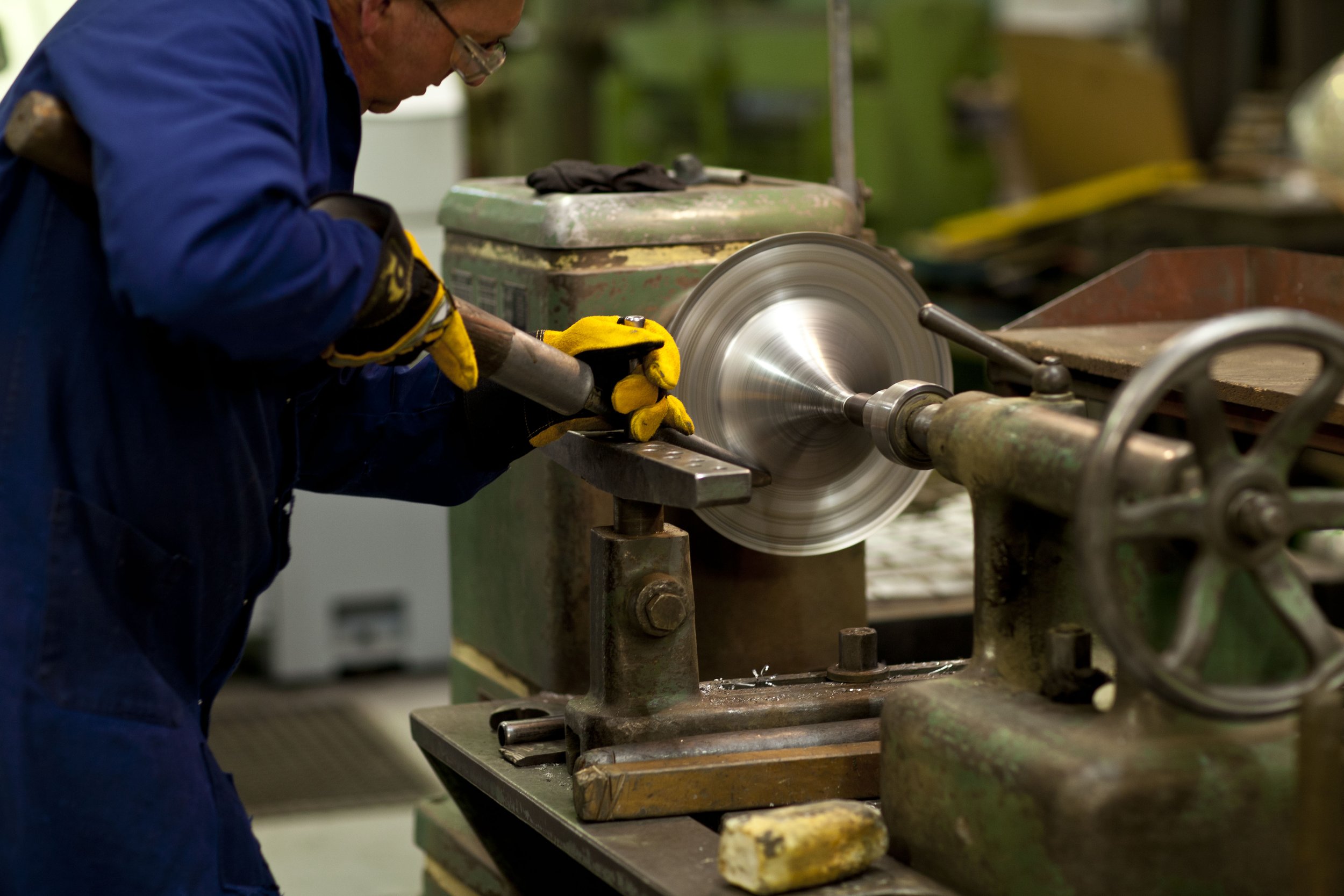
Metal spinning allows aluminium to be shaped into symmetrical forms such as domes and cones.
These are frequently seen in:
Sculptural pendant lights
Statement chandeliers
Directional spotlight housings
Musical instrument mutes
The process creates seamless curves that feel refined and architectural.

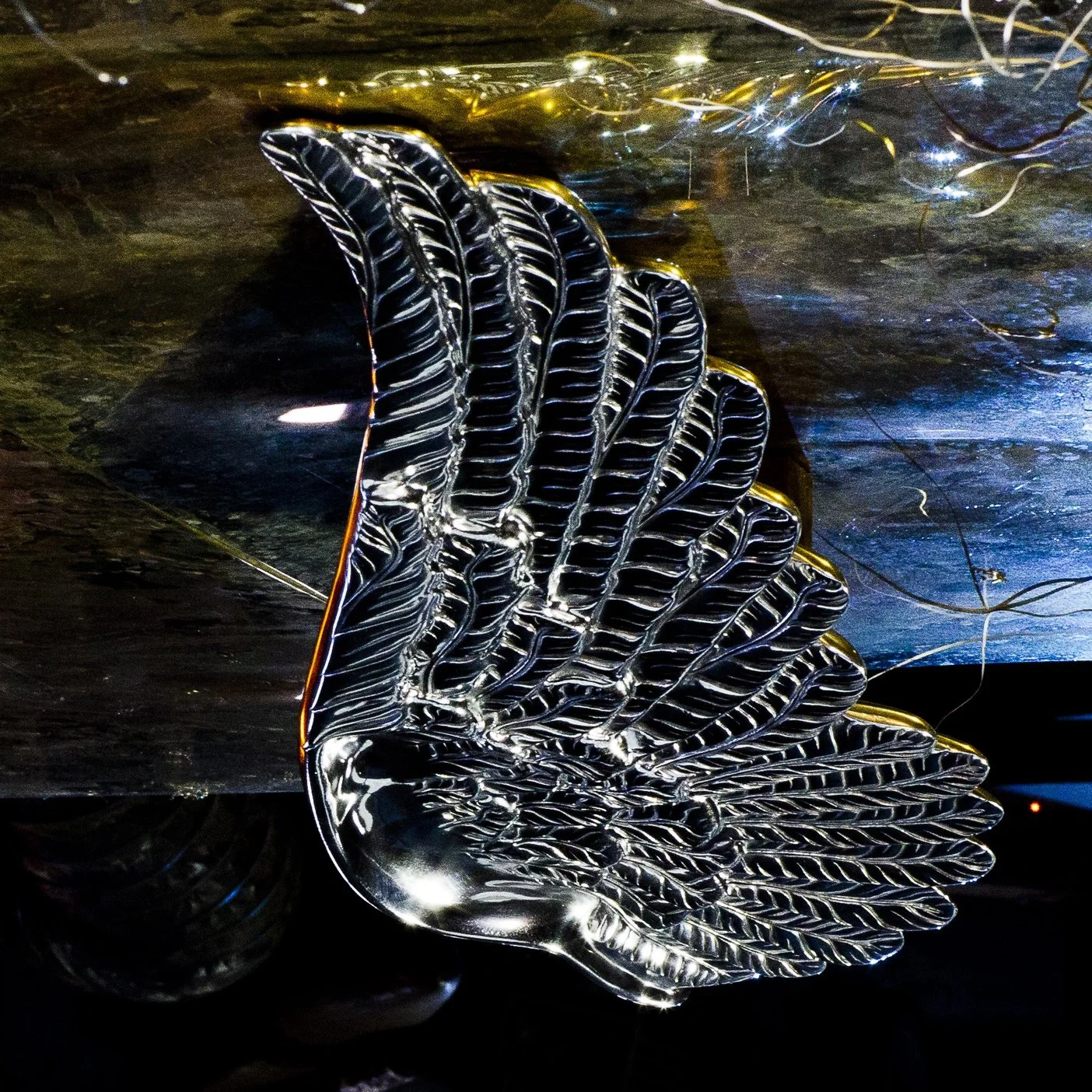
An aluminium instrument mute
Part of a tuning mechanism made by FRD for the former BBC World Service transmitting station at Rampisham Down, Dorset
Welding & Fabrication
For large-scale lighting sculptures, aluminium sections are TIG welded and fabricated into custom frameworks. The strength-to-weight ratio allows dramatic installations without excessive ceiling reinforcement.
Anodising & Surface Finishing
Anodising enhances durability while introducing subtle tones, champagne, bronze, graphite or black, ideal for luxury interiors. Brushed and satin finishes diffuse light softly, creating a warm, elevated atmosphere.
Aluminium In Sculptural Design
Aluminium has long been associated with monumental sculpture. Its durability and lightness make it suitable for expressive public works as well as refined interior pieces. It has a low melting point, ideal for casting large sculptural pieces.
A well-known example is the figure commonly referred to as Eros in Piccadilly Circus, formally part of the Shaftesbury Memorial Fountain. The winged figure is actually Anteros, and although originally cast in aluminium in the 19th century (a bold and innovative choice at the time), it demonstrated the material’s potential for fine artistic detail combined with structural resilience.
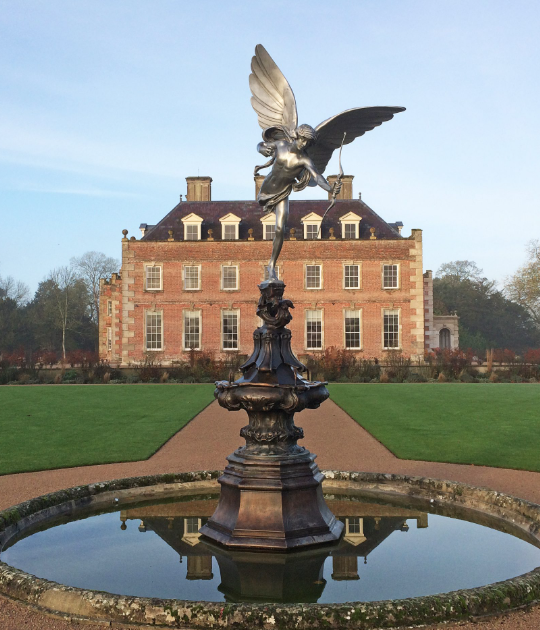
In Dorset, the striking aluminium sculpture of Anteros at St Giles House continues this dialogue between classical inspiration and contemporary materiality. Set within the historic St Giles Estate in Wimborne St Giles (where our workshop and design studio are located), it reflects how aluminium can bridge heritage and modern craftsmanship.
These examples highlight aluminium’s unique ability to hold intricate detail while maintaining longevity, a crucial factor in both exterior and interior sculptural commissions.
The Anteros Statue:
St Giles Estate in Dorset hosts one of the few, if not only, identical copies of the Anteros statue (mistakenly known as Eros) cast by Sir Alfred Gilbert for the Shaftesbury Memorial Fountain in London
Aluminium In Artistic Sculpture
Ron Arad
Ron Arad’s work sits at the intersection of sculpture, engineering and design, and aluminium plays a key role in that experimental language. Rather than treating it as a purely industrial material, he pushes aluminium into unexpected, fluid forms, often exploiting its lightness and ability to be shaped into complex, almost impossible geometries.
In pieces such as his ribbed, vacuum-formed aluminium chairs and honeycomb aluminium tables, the material becomes both structure and surface, allowing him to blur the boundary between function and art. His approach reflects a wider practice of continuous material testing, where aluminium is not hidden or refined away, but celebrated for its raw, expressive potential within contemporary design.
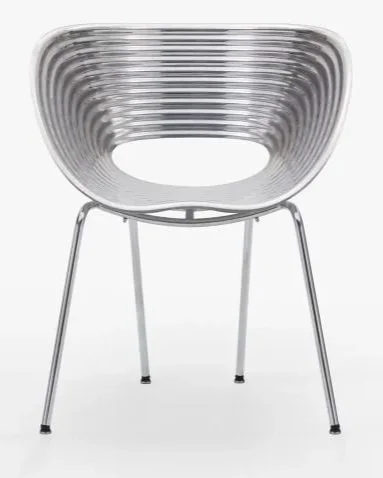
Ron Arad
Ron Arad's vacuum-formed aluminium chair is the Tom Vac, originally designed in 1997 for a "Totem" installation commissioned by Domus magazine in Milan. The chair featured a corrugated aluminium shell designed for both stacking and structural strength,
Jeff Koons
Jeff Koons has long explored aluminium as a material that combines industrial precision with highly polished, contemporary form. In works such as Tulips, the metal is transformed through meticulous anodised fabrication and mirror-like finishes, elevating a simple balloon-like composition into something monumental. The use of aluminium allows for both lightness in structure and an almost liquid surface quality, reflecting its surroundings and engaging the viewer directly in the work.
Within this context, aluminium becomes more than a structural medium, it becomes part of the visual language of luxury, reflection and modern sculpture, aligning with the same material sensitivity and craft-led thinking found in contemporary architectural metalwork practice.
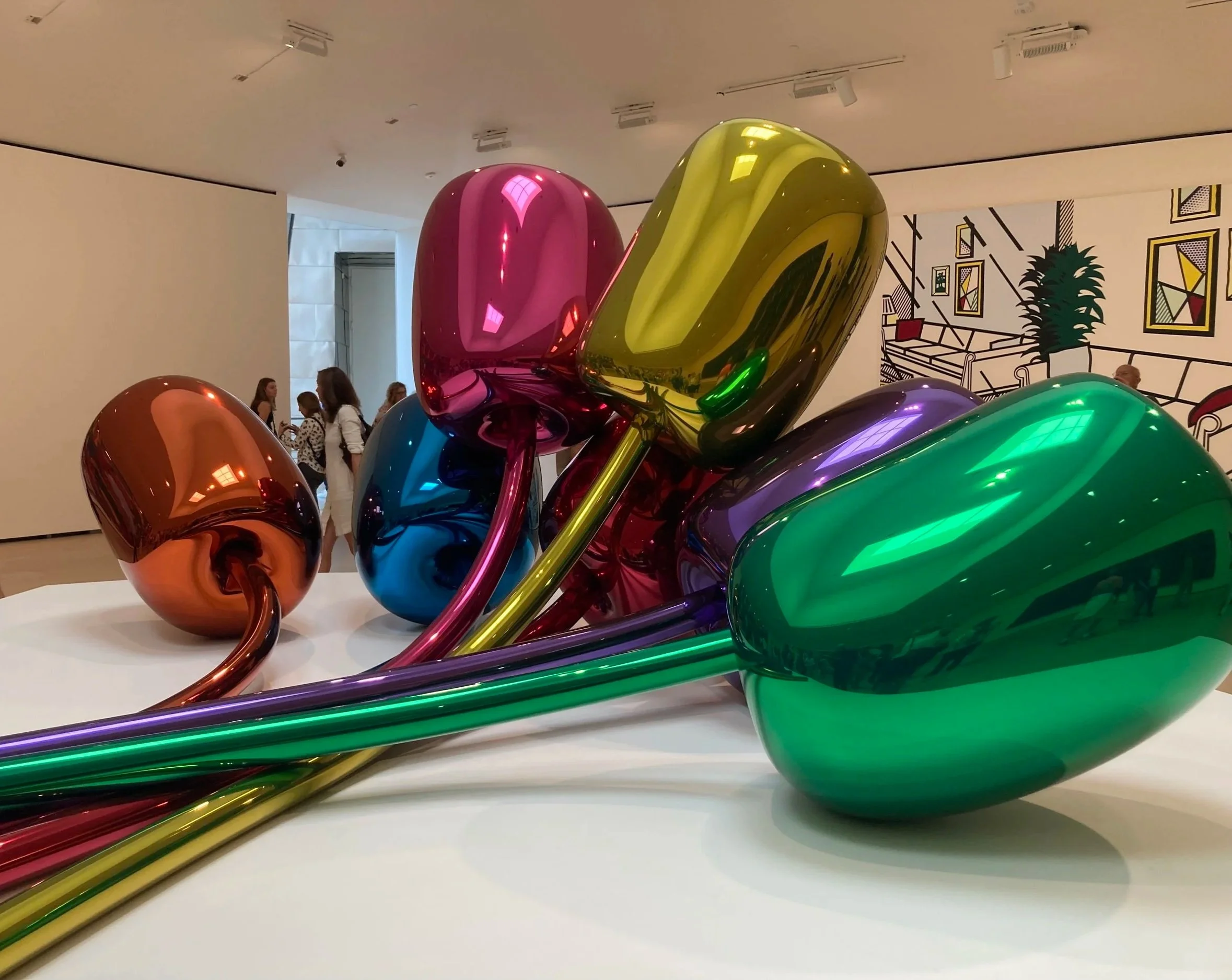
Jeff Koons
‘Tulips’ is a series of sculptures by American artist Jeff Koons, made between 1995 and 2004. There are five unique versions.
Aluminium In Notable Landmark Buildings
The Empire State Building, New York
At the heart of the Empire State Building, completed in 1931, aluminium played a quietly transformative role in defining both its aesthetic and performance. Used extensively in combination with stainless steel, aluminium featured in elements such as window spandrels and framing, helping to reduce weight while maintaining structural integrity across its 102-storey height.
In true Art Deco fashion, the metal also contributed to the building’s refined, modernist detailing, delivering clean lines, durability, and a subtle reflective quality that elevated the façade beyond traditional masonry alone. With over 700 tons of aluminium and stainless steel incorporated into the structure, the material was instrumental in achieving both efficiency and elegance at an unprecedented scale.
From an FRD perspective, it’s a compelling early example of how aluminium bridges craft and innovation; lightweight, adaptable, and inherently contemporary, yet capable of sitting seamlessly within a timeless architectural language.
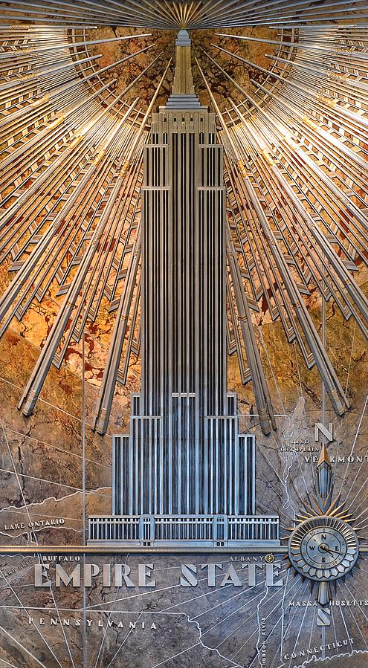
The Empire State Building
The Image of NYC
With its soaring height and signature design, the Empire State Building defines the New York City skyline.
The Empire State Building, completed in 1931, prominently features roughly 730 tons of aluminum and stainless steel in its structure.
It was one of the first skyscrapers to use aluminium extensively for its 6,514 window profiles, spandrels, and Art Deco interior, including the lobby. The metal was chosen for its strength, corrosion resistance, and light weight.
London Olympic Aquatics Centre
At the London Aquatics Centre, aluminium forms the sleek outer skin of its iconic wave-like roof. Designed by Zaha Hadid, the sweeping structure is clad in precision-engineered aluminium panels that follow the building’s fluid geometry, echoing the movement of water itself.
Rather than relying on heavy bespoke fabrication, much of the aluminium was formed from standard sheets, expertly manipulated to create the roof’s double-curved profile, an elegant balance of efficiency and ambition. The result is a lightweight yet durable envelope that sits over a vast steel and timber framework, reflecting light across its surface while contributing to the building’s sustainability through recyclable material content.
In true FRD spirit, it’s a material used not just for performance, but for expression, where engineering precision meets architectural poetry.
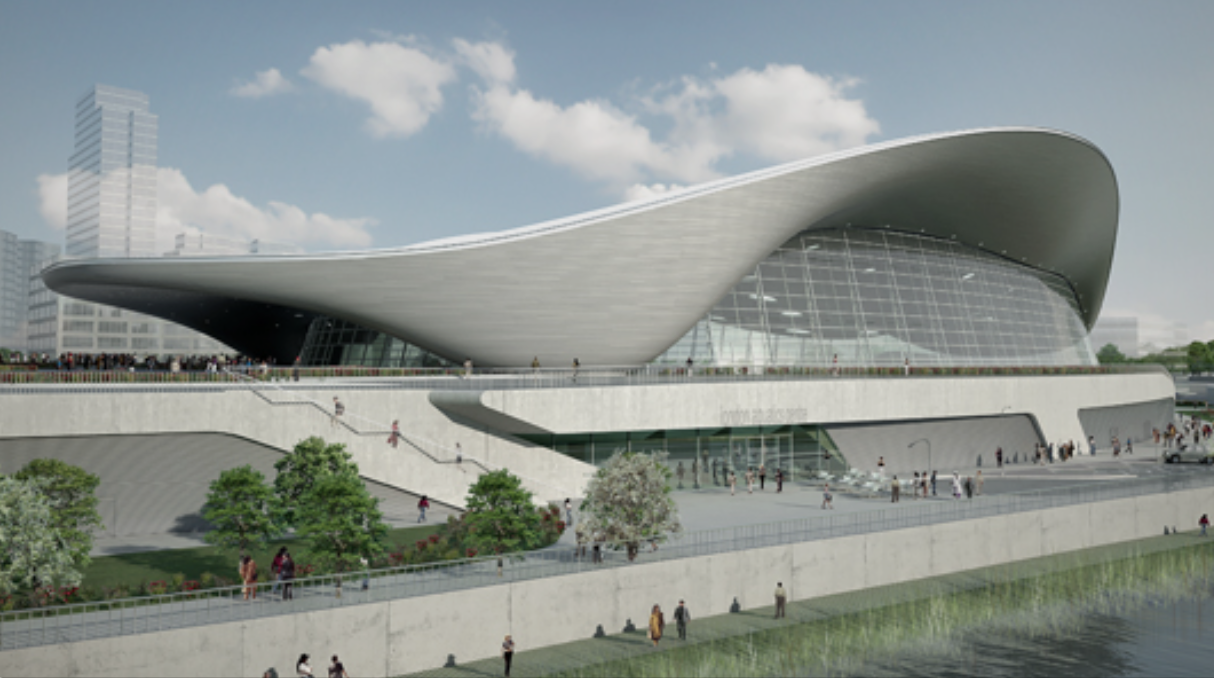
The London Aquatics Centre
The London Aquatics Centre features an iconic, wave-like roof covered in aluminium, designed by Zaha Hadid Architects, stretching 160m long and up to 90m wide.
Aluminium For Luxury Interiors
In high-end residential and hospitality settings, aluminium is increasingly specified for:
Bespoke sculptural lighting installations
Feature stair balustrades
Architectural wall panels
Decorative screens and room dividers
Freestanding art pieces
For luxury interiors, the emphasis is on design-led craftsmanship. Aluminium allows designers to create bold, fluid shapes that appear almost weightless, suspended forms that interact with light and shadow throughout the day. Its reflective quality enhances layered lighting schemes, while darker anodised finishes introduce depth and understated drama.
The Craft Behind The Finish
Creating exceptional aluminium lighting or sculpture requires:
Expert fabrication knowledge
Precision engineering
Skilled hand-finishing
An understanding of architectural integration
At FRD Designers & Makers, the process is collaborative; working with interior designers, architects and private clients to transform aluminium into sculptural statements that elevate space. Each piece is carefully considered: how it hangs, how it reflects light, how it feels within the architecture. In luxury interiors, it is never just about the object, it is about atmosphere, proportion and permanence.
From the iconic figure in Piccadilly Circus to contemporary installations in Dorset estates, aluminium has proven itself as both an artistic and architectural material. Today, it stands at the forefront of bespoke lighting design and sculptural interiors, a material capable of precision, elegance and bold creative expression.